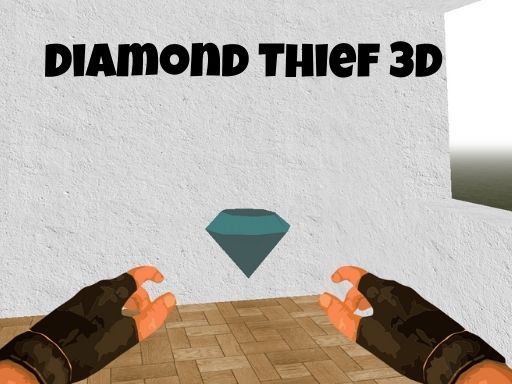
Gem Collector 3D Puzzle succeeds as a low-pressure strategy game because it replaces combat with observation. The core loop—study guard routes, plan a path, collect diamonds, reach the exit—rewards careful thinking over fast reactions. Colorful 3D mansion rooms and intuitive touch or click controls keep the experience accessible. The main limitation is that the input does not describe additional modes or features beyond the core puzzle structure, so players seeking variety outside the main levels may find it focused. It is best suited for families and casual players who enjoy stealth puzzles without violence.
Gem Collector 3D Puzzle places players inside a series of mansion rooms rendered in colorful 3D. The goal in each room is straightforward: collect every diamond before reaching the exit. Standing between the player and that goal are patrolling guards whose movement follows set patterns. There is no combat or violence—success depends entirely on observation and timing.
Players control a character using simple touch or click inputs. Tapping or clicking moves the character through the room. The challenge comes from reading guard routes and choosing when to advance, when to wait, and when to slip past. Hiding spots and corners provide temporary cover. A single misstep can lead to detection, so each move is a small decision that adds up.
Each level introduces new mansion layouts and fresh guard behaviors. Early rooms establish basic patrol patterns, while later ones require longer routes and more precise timing. The game does not rely on increasing enemy speed alone; instead, it rearranges space and guard paths to keep the puzzle feeling new. Retrying a level is part of the process—learning a guard's loop is often the key to finishing it.
Patience matters more than reflexes. Rushing usually ends in capture, while a slow, observant approach reveals safe windows. The family-friendly theme and absence of inappropriate content make it suitable for younger players and anyone who prefers thoughtful challenges over action. The intuitive controls lower the barrier to entry, but the later rooms still demand planning and spatial awareness.









Comments
0 comments